
FAQ
Sliding Door Questions
Rollers, tracks, locks, fogged glass, screens and booking — answered straight.
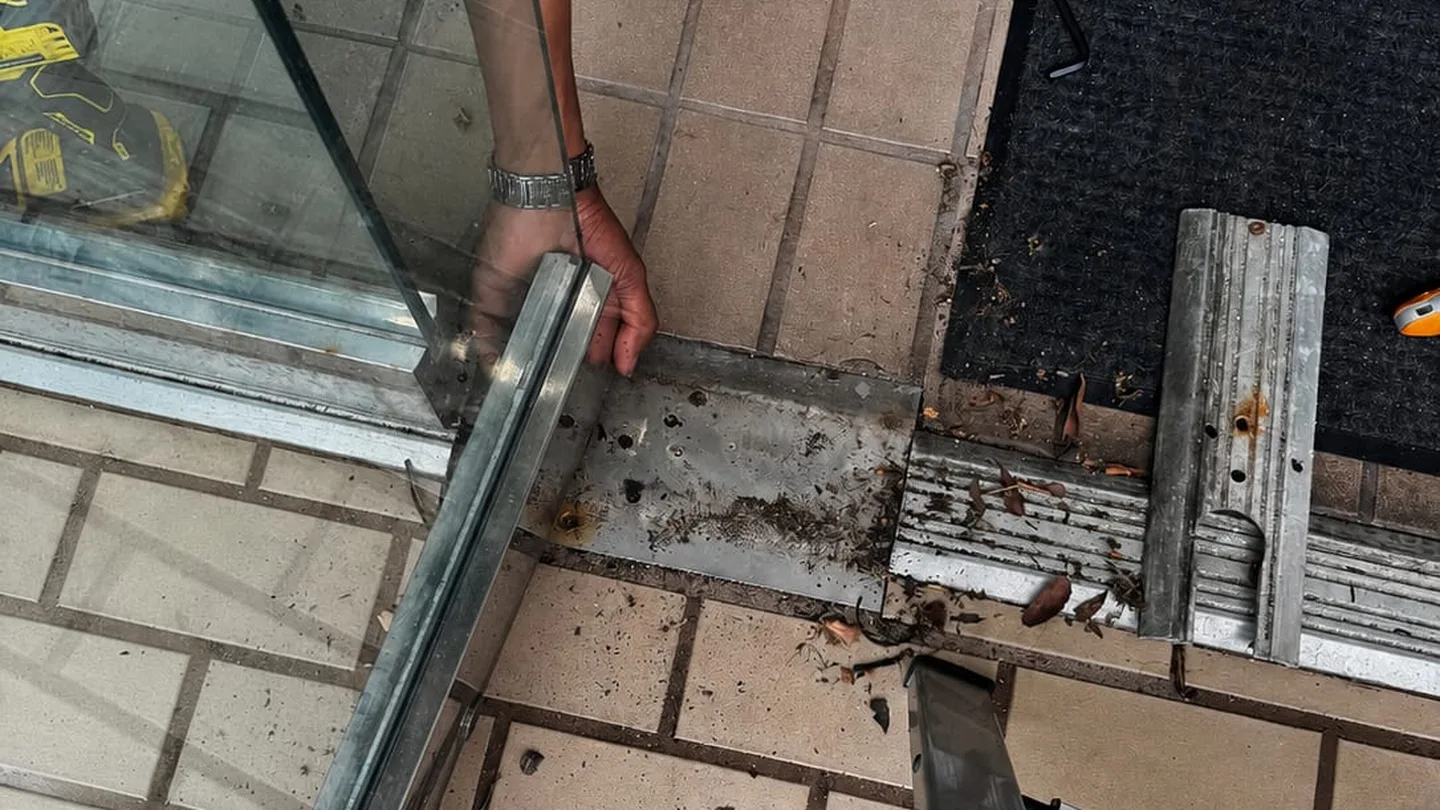
If the door drags evenly and has slowly gotten heavier over years, rollers are the likely story — wheels wear flat and bearings seize. If it drags at one corner, drifts open on its own, or the lock suddenly stopped catching, alignment is involved. Most visits check both: we lift the panel, inspect the rollers first, and only then talk parts.
It is the most common mistake we see. Lubricant on a dirty track makes an abrasive paste that wears rollers and rails faster, and it cannot fix a wheel that no longer turns. Clean the track thoroughly first; if the door still drags on a clean track, the problem is mechanical and worth a real look.
It depends on what the door actually needs — rollers, track work, a lock, glass — which is why your exact quote is confirmed free and in writing before work begins, with no obligation. This month the Sliding Door Repair Special is running with special pricing — call (855) 640-0404 and ask for it by name.
Treat it as one: a door that does not lock is not secure, whatever the hour. Our 24/7 emergency service secures the opening the same night — repairing the lock if possible, or fitting positive secondary security — and the permanent fix is quoted in writing.
Yes — rescreening, pet-resistant mesh, frame straightening, screen rollers and handles, and full measured replacement screens. If your pet has been using the screen as a door of its own, ask about pet mesh and pet doors.
We serve 372 communities across Maryland, Washington DC and Northern Virginia from our Beltsville base — check your ZIP in the finder above or browse the full service-area list.
Rollers wear. The wheels develop flat spots, bearings corrode or fill with grit, and eventually the panel is dragging its weight along the track instead of rolling on it. Humid DMV summers and the grit that winter leaves behind accelerate all of it.
Lubricant on a dirty track makes grinding paste, and lubricant cannot fix a wheel that no longer turns. We do see doors temporarily 'helped' by spray — for about a week. The actual fix is new rollers and a clean, true track, which is also the cheaper fix in the long run.
A track cap is a stainless steel cover precision-formed to snap over your existing worn rail, giving the rollers a brand-new, corrosion-proof running surface without demolishing the frame. It is the standard professional restoration for worn aluminum rails and, installed correctly, outlasts the original track. It is not a cover-up for structural damage — if the sill or frame itself is compromised, we will say so.
Three things: grit, which is an abrasive ground into the rail by every pass of the panel; water, which sits in the sill and pits the metal; and worn rollers, which stop rolling and start ploughing. The three feed each other, which is why we always assess rollers and track together.
Usually alignment, not the lock itself. As rollers wear, the panel sits lower; as houses settle, the jamb moves; the latch hook then meets the keeper a few millimeters off and cannot engage. That is why lock calls often start with a panel adjustment — replacing the lock without fixing the geometry just wears out the new lock.
A factory latch alone is a deterrent, not a barrier — aging sliders can often be lifted off their track from outside. With anti-lift blocks, a properly engaged mortise lock and one secondary device (foot bolt or security bar), a sliding door becomes a genuinely hard target. We fit all three, and we will tell you plainly which your door needs.
If the frame is straight and the corners are sound, rescreening is absolutely worth it — new mesh and fresh spline make it look and work new. If the frame is bent or the corners are cracked, a replacement screen is the honest spend; new mesh in a racked frame tears again within the season.
A heavier vinyl-coated mesh, several times stronger than standard fiberglass screen. It stands up to claws and the occasional full-speed dog, and it is the single most popular upgrade we install in pet households. It is slightly less transparent than standard mesh — most owners consider that a fair trade by the second week.
Almost never. Fogging means the insulated glass unit's seal has failed and moisture has gotten between the panes. The fix is a new glass unit fitted into your existing frame — same opening, same door, clear glass, typically a fraction of replacement-door cost. The frame and rollers carry on as they were.
It must be — building code requires safety glazing in doors, and tempered glass is the standard. We install to code and will show you the specification on the glass itself, not just the recommendation.
Usually a combination: worn bottom seals, a sill whose drainage weep holes are blocked with years of debris, and wind-driven rain pushing against seals that no longer compress. Each has a fix, and the first job is identifying which combination your door has.
A sliding door is one of the largest openings in the house, and a worn seal leaks conditioned air around its entire perimeter, all day. A tight door is measurable — and the room beside the door simply feels better, which most owners notice before the bill does.
Often both, in sequence: worn rollers cause the misalignment. We inspect the rollers first — if they are sound, adjustment alone is the fix, and we will tell you that instead of selling parts.
Yes — the few millimeters a sliding door cares about are well within what settling, deck movement and seasonal ground shift deliver. The door does not need the house to be perfect; it needs to be adjusted to the house as it stands today.
Yes — commercial door work is routinely scheduled before opening, after closing or overnight for lockup-critical repairs, and emergency lockup service runs around the clock for account customers. A door that cannot secure the building is treated as the emergency it is.
We do — patch fittings, rails, pivots and closers on frameless systems are a specialty of this crew, including the corrosion failures damp properties see at the bottom rail. If a fitting has seized or a rail has rotted from inside, we will show you the hardware and the options before ordering parts.
We will give you both numbers in writing and let the arithmetic decide. Sound frame, available parts: repair usually wins, and we will say so. Corroded sill, failed frame geometry or obsolete system: replacement stops the recurring-repair subscription. What we will not do is sell a new door to fix a roller problem.
A standard replacement is typically a one-day job once your door is on site: old system out, new system in, sealed, adjusted and tested, with the area left clean. Custom sizes and special-order systems are scheduled when the door arrives, and we secure the opening at every stage.
Please don't — forcing a derailed panel bends tracks and cracks glass. Keep the door where it is, keep people and pets clear of it, and call us. Re-railing a heavy panel safely is a two-person lift with the rollers inspected first.
Keep everyone — especially kids and pets — out of the room, don't touch loose shards, and if the opening is exposed, close off the room. When we arrive we make the glass safe, secure the opening, and measure for the replacement unit.
Book Your Door Repair
Tell us what the door is doing and we'll call you back to confirm. Rather talk now? (855) 640-0404 — answered 24/7.